
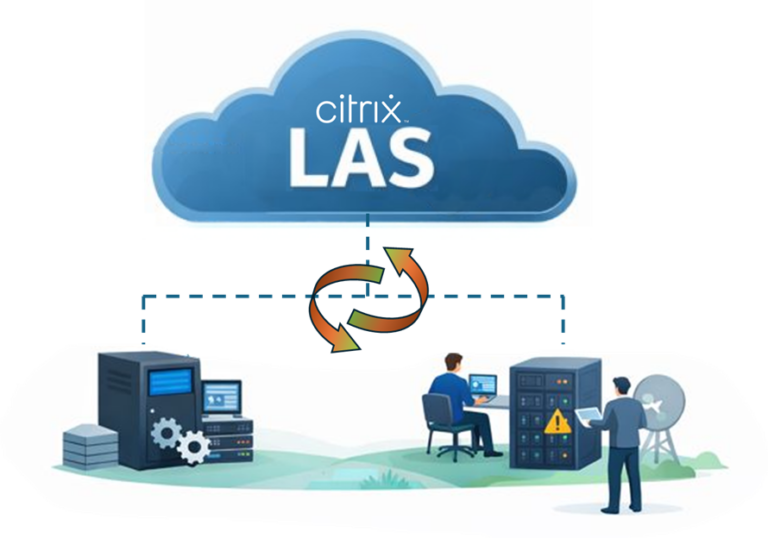
Introduction
Citrix is transitioning all on-premises licensing to the new License Activation Service (LAS). The critical deadline is April 15, 2026, when the traditional file-based licensing system will reach End of Life (EOL). After this date, LAS will be the only supported method for activating and licensing Citrix products.
As a Citrix End-User Computing (EUC) provider with over 20+ years of experience designing, deploying, and optimizing Citrix environments for organizations of all sizes, we have navigated numerous licensing model shifts. The move to Citrix’s License Activation Service (LAS) represents a significant evolution in how on-premises products handle licensing, shifting from traditional file-based methods to a cloud-activated approach.
Announced by Citrix, this change mandates compliance by April 15, 2026, after which legacy licensing will cease to function, potentially disrupting access to critical components such as Citrix Virtual Apps and Desktops (CVAD), NetScaler, Provisioning Services (PVS), XenServer, Workspace Environment Management (WEM), and XenMobile Server.
This whitepaper draws from the latest Citrix documentation, expert analyses, and real-world deployment insights as of late 2025. Its purpose is to educate customers on the LAS architecture, outline key considerations for a successful transition, and estimate the effort involved. Additionally, we will highlight areas where specialized support, such as that provided by Samana Group, can streamline the process and mitigate risks.
The goal and intent of this whitepaper is to equip IT leaders and architects with actionable knowledge to plan effectively in the limited time remaining.
Understanding LAS: Architecture and Implications
LAS introduces a cloud-based activation mechanism that replaces the offline, file-based licensing model. At its core, LAS requires Citrix License Servers to register with Citrix Cloud services, enabling periodic activation checks and telemetry uploads.
This architecture involves:
- Core Components: The License Server (version 11.17.2 build 51000 or later) acts as the on-premises hub, communicating outbound via HTTPS (port 443) to endpoints like las.cloud.com for activations and cis.citrix.com for telemetry. Activations are hardware-bound, tying to metadata such as FQDN, MAC address, CPU ID, and other system details.
- Dependencies: For environments using NetScaler, the NetScaler Console (formerly ADM) is mandatory for LAS integration. CVAD, XenServer, and other products must be updated to compatible versions (e.g., CVAD 2203 LTSR CU7+, NetScaler 14.1-51.x+).
- Operational Changes: Licenses activate every 8-24 hours with a 30-day caching grace period for connectivity issues. Telemetry (usage data uploads) must occur at least every 90 days, either automatically or manually, to maintain support eligibility. Clustered License Servers are unsupported under LAS, necessitating a shift to standalone or load-balanced configurations.
The implications are twofold: enhanced security and compliance for Citrix, but increased dependency on internet connectivity and cloud services for customers. In my experience, this can introduce new failure points, particularly in distributed or regulated environments, but it also simplifies long-term management by centralizing entitlements in Citrix Cloud.
Key Considerations for Transitioning to LAS
Transitioning requires a methodical assessment of your current environment. Based on deployments we have overseen, here are the primary factors that influence time and effort:
- Existing Infrastructure Readiness: If NetScaler Console is already deployed and operational, this reduces complexity. Otherwise, its design, deployment, and integration can add weeks, including hardware provisioning and configuration testing.
- Version Compatibility and Upgrades: Audit all components for LAS support. Outdated versions demand phased upgrades, which I’ve found can extend projects by 50% if multiple products are involved. For instance, mismatched CVAD or NetScaler builds require careful sequencing to avoid downtime.
- Network and Connectivity: LAS demands reliable outbound access to Citrix Cloud. Firewalls, proxies, or restricted networks necessitate reviews and modifications. In air-gapped setups, custom arrangements with Citrix support are essential, often prolonging timelines.
- Registration and Activation Process: Each License Server requires one-time registration, generating a code linked to your organization’s Citrix Cloud ID. Multi-server environments multiply this effort, with sync times of 12-24 hours. Hardware changes post-activation invalidates licenses, so stabilize servers beforehand.
- Telemetry and Compliance: Configure and monitor uploads to prevent support suspensions. This includes managing data files and ensuring disk space.
- High-Availability and Disaster Recovery: Migrate from unsupported clusters and ensure DR sites are independently LAS-compliant. Simultaneous production/DR usage can cause conflicts if not addressed.
- License Types and Administrative Tasks: Perpetual licenses or legacy models (e.g., NetScaler pooled vCPU) may require consultations for trade-ups. Document everything thoroughly using tools like Citrix Licensing Manager.
- Testing and Validation: Comprehensive testing in a lab or staging environment is non-negotiable. Validate activations, user sessions, and failover scenarios, incorporating rollback plans for pre-deadline reversions.
In larger environments, these elements compound; we have seen overlooked details like Org ID mismatches lead to extended troubleshooting.
Where Samana Group Can Provide Support
As an experienced partner, Samana Group specializes in Citrix EUC optimizations and can assist in several areas to reduce internal burden:
- Environment Audits: Conduct thorough inventories and compatibility checks using our tools and expertise, identifying gaps faster than in-house efforts.
- Planning and Execution: Guide phased upgrades, minimizing downtime through best practices.
- Network and Security Configurations: Assist with firewall rules, proxy setups, and compliance.
- Testing and Validation Frameworks: Provide structured testing protocols and monitoring setups to catch issues early.
- Custom Solutions for Edge Cases: Handle air-gapped environments or legacy license migrations via direct Citrix coordination.
For more information contact Samana Group at solutions@samanagroup.com or visit https://www.samanagroup.com/complimentary-services/
Executive Summary
Key Insights
- LAS shifts on-premises licensing to a cloud-activated model, mandating upgrades and connectivity by April 15, 2026, to avoid disruptions.
- It introduces efficiencies like centralized entitlements but adds dependencies on Citrix Cloud and telemetry compliance.
- Average transitions require medium effort (22-45 person-days) over 4-8 weeks, focusing on assessments, upgrades, and testing.
Challenges
- Compatibility upgrades and NetScaler Console deployment can extend timelines if not pre-existing.
- Network constraints and hardware-bound activations increase troubleshooting complexity.
- Larger or distributed environments amplify administrative and testing overheads.
Recommendations
- Begin with a comprehensive audit and plan upgrades in phases, aligning with maintenance windows.
- Stabilize hardware and networks early; incorporate robust testing with rollback options.
- Engage partners for expertise in complex scenarios to mitigate risks and accelerate delivery.
For a complimentary license assessment tailored to your environment, contact Samana Group at solutions@samanagroup.com or visit https://www.samanagroup.com/complimentary-services/ Our complimentary review can provide a customized roadmap, ensuring a smooth LAS transition.
 Download our whitepaper!